
Discover GUDGU Super Pure Beetroot Powder – natural nitrates, betalain pigments and fibre – plus three recipes using GUDGU Whey Protein and Pantry staples.
GUDGU Super Pure Beetroot Powder
The root that brings colour, fibre and performance potential to the table.
The Powder That Leaves Evidence
Beetroot Powder does not enter a kitchen quietly.
It colours the scoop. It colours the smoothie. It colours your fingers. It will also locate the one white tea towel you should have moved before opening the container.
That deep ruby colour is part of what makes beetroot so interesting. Beetroot naturally contains pigments called betalains, alongside dietary nitrate, fibre and other plant compounds.
GUDGU Super Pure Beetroot Powder turns the whole vegetable into a convenient pantry ingredient. No peeling. No boiling. No beetroot rolling around beneath the fridge. No chopping board that stays burgundy until further notice.
Just pure beetroot powder, ready for shakes, smoothies, dips, breakfast bowls, baking and active-day routines.
What Makes GUDGU Beetroot Powder Super Pure?
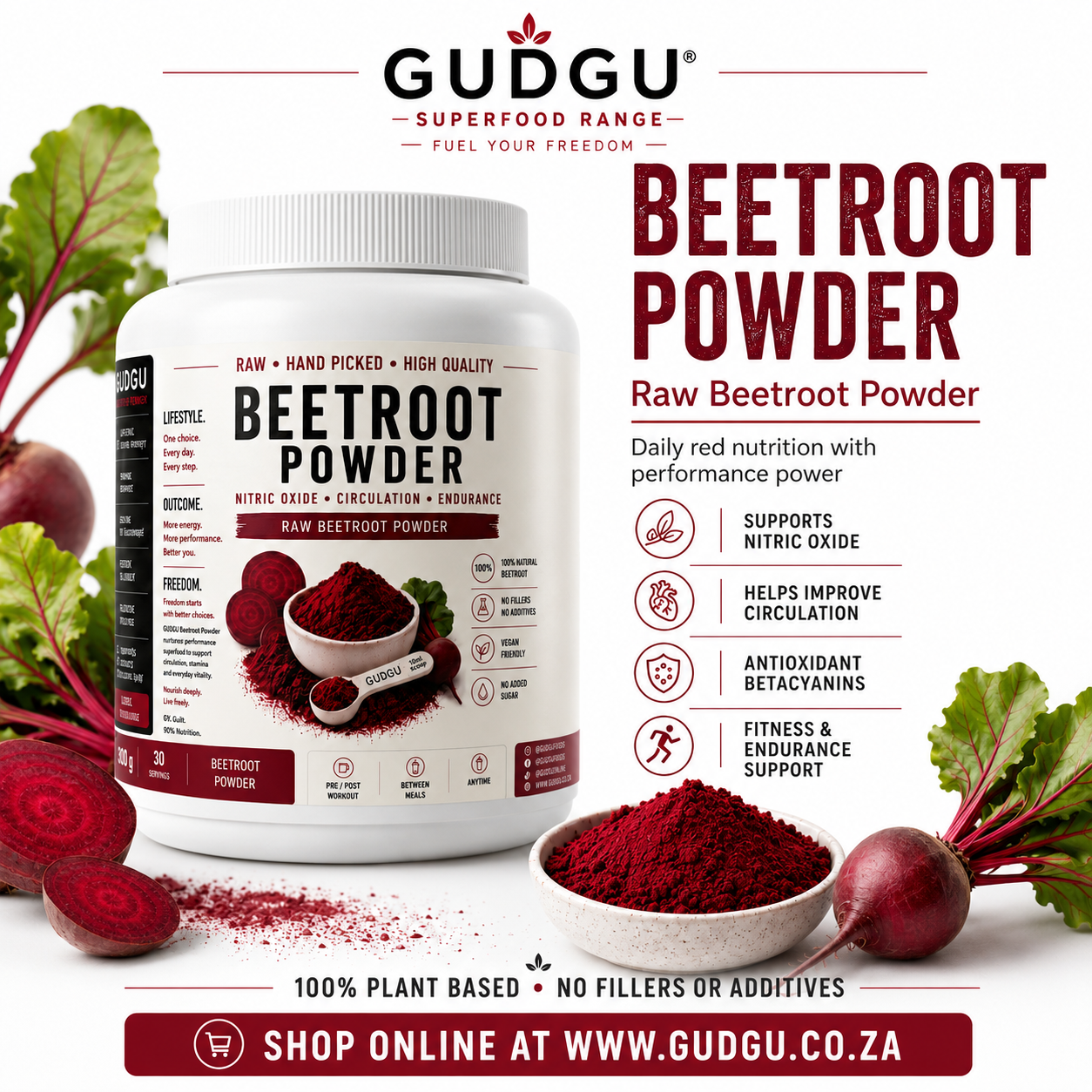
GUDGU Beetroot Powder contains one ingredient: 100% Beetroot Powder, Beta vulgaris. No added sugar, flavouring, or unnecessary fillers – the sugar shown in the nutritional table occurs naturally in beetroot. It hasn’t been spooned into the container.
| Per 10g serving | |
|---|---|
| Energy | 27 calories |
| Protein | 1.3g |
| Carbohydrate | 4.2g |
| Naturally occurring sugars | 2.5g |
| Total fat | 0.2g |
| Dietary fibre | 2.1g |
| Sodium | 12mg |
Pack size: 300g · Suggested serving: 10g · Servings per container: 30
One 10g serving provides roughly 8% of the general adult Daily Value for fibre.
What Makes Beetroot Red?
The dramatic red-purple colour comes mainly from plant pigments called betalains. The best-known red pigment is betanin, while beetroot also contains yellow-orange pigments called betaxanthins.
These compounds have antioxidant activity and have drawn scientific interest for their possible role in oxidative stress and inflammation – though much of that evidence comes from laboratory, animal and small human studies, so betalains shouldn’t be marketed as a disease treatment.
Their most obvious benefit needs no microscope: they can turn an ordinary smoothie, hummus bowl or batch of energy bites an extraordinary shade of red.
Why Do Active People Use Beetroot?
Beetroot naturally contains dietary nitrate. After it’s consumed, bacteria in the mouth help convert some of it into nitrite, which the body can then use in pathways that produce nitric oxide – a molecule involved in blood-vessel function, circulation, muscle contraction and oxygen delivery during activity.
Research on nitrate-rich beetroot juice and standardised beetroot supplements has found modest improvements in some measures of exercise economy, endurance and muscular performance. The effects aren’t guaranteed, and vary with nitrate dose, activity type, training level and individual response.
Here’s the important catch: most performance studies use a product with a measured nitrate content. The current GUDGU nutritional information doesn’t state how many milligrams of nitrate are present in a 10g serving. That means we can say GUDGU Beetroot Powder is a natural nitrate-containing food – we can’t promise a specific increase in nitric oxide, stamina or athletic performance until the finished powder has been tested for nitrate content.
That isn’t weaker marketing. It’s honest marketing.
Can Beetroot Support Blood Flow?
The nitrate-nitrite-nitric oxide pathway is involved in the widening and relaxation of blood vessels. Clinical research on nitrate-rich beetroot juice has found reductions in systolic blood pressure in some groups, including adults with hypertension – though results vary, and beetroot should be treated as a food or possible dietary addition, never a replacement for prescribed treatment.
People taking blood-pressure medication, or those who already have low blood pressure, should speak to a healthcare professional before regularly using concentrated nitrate products. Nobody should stop or reduce prescribed medicine because their smoothie turned red.
Does Beetroot Give You Energy?
Beetroot isn’t a stimulant. It doesn’t work like caffeine, and one 10g serving provides only 27 calories – not enough food energy to replace a meal or fuel a full training session.
Its connection to performance comes mainly from its natural nitrate content and nitrate’s possible effects on oxygen use and muscle function. For a more complete pre-training meal, combine GUDGU Beetroot Powder with a source of carbohydrate and protein, such as fruit, oats, yoghurt or GUDGU Whey Protein.
Does Beetroot Reduce Lactic Acid?
This claim needs care.
Lactate isn’t simply a waste product that beetroot washes out of the muscles – the body produces and uses lactate during exercise, and fatigue is influenced by many factors including training status, exercise intensity, fuel availability, temperature and the nervous system.
Some studies have found that nitrate-rich beetroot products may improve exercise tolerance or certain lactate-related measures in specific groups. That doesn’t prove any ordinary beetroot powder will prevent lactic-acid build-up or stop fatigue outright.
A safer statement: beetroot is popular in active lifestyles because its natural nitrate content may support exercise efficiency when consumed in an effective amount.
Is Beetroot Powder a Detox?
No food powder performs a medical cleanse. Your liver, kidneys, lungs, skin and digestive system already manage the body’s normal waste-removal processes.
Beetroot Powder can add fibre and plant compounds to a balanced diet. It cannot erase several days of poor sleep, little water and enthusiastic eating by Tuesday morning. “Detox” may sound exciting, but it’s too vague to explain a measurable product benefit.
What Are the Everyday Benefits?
GUDGU Beetroot Powder is useful even when you’re not wearing training shoes. It provides a concentrated beetroot ingredient, dietary fibre, natural plant pigments, a deep ruby colour, and an earthy, slightly sweet flavour – a convenient alternative to peeling and cooking beetroot, and a simple ingredient for sweet or savoury recipes.
Add it to: smoothies · protein shakes · yoghurt · overnight oats · hummus and dips · soups · pancakes · muffins · energy bites · sauces · homemade pasta and wraps
How Does Beetroot Powder Taste?
Beetroot has a naturally earthy flavour. Some people love it immediately. Others describe it as a vegetable that’s just been informed it is soil.
The flavour becomes easier to enjoy paired with: berries · apple · lemon · lime · orange · ginger · cocoa · vanilla · cinnamon · cumin · garlic · black pepper · yoghurt · tahini or sesame seeds.
GUDGU Lemonade and Lime Concentrates are especially useful here – acidity helps balance beetroot’s earthy sweetness.
How to Use GUDGU Beetroot Powder
The suggested serving is 10g mixed into 200–250ml water, juice, milk or another drink – or stirred into food. Start with 5g if you’re new to beetroot powder, or if you only want a little colour. Use the full 10g serving in a substantial smoothie, shake or recipe.
The powder can settle in liquid – shake or stir the drink again before finishing it.
When Should You Take It?
Use GUDGU Beetroot Powder whenever suits your routine. Many studies of nitrate-standardised beetroot products use them roughly two to three hours before exercise, commonly with measured nitrate doses somewhere between 316mg and 985mg per day.
We can’t assume that 10g of unstandardised beetroot powder provides the same nitrate amount. Until GUDGU has tested and confirmed the nitrate content, we position this product as an active-day food rather than promising a precise pre-workout result.
Can Beetroot Turn Urine or Stool Red?
Yes. Beet pigments can temporarily give urine or stool a pink or reddish colour – known as beeturia, and usually harmless.
Red urine can also have medical causes, so don’t automatically blame beetroot when the colour is unexplained, persistent, accompanied by pain, or appears without recent beetroot consumption.
Who Should Take Extra Care?
People with a history of calcium oxalate kidney stones may need to manage high-oxalate foods carefully – beets are among the foods that can raise urinary oxalate in some people.
Speak to a qualified healthcare professional before regular use if you:
- Have kidney disease
- Frequently develop kidney stones
- Have very low blood pressure
- Take medication for high blood pressure
- Are pregnant or breastfeeding
- Are following a medically prescribed diet
According to current label information, the product may contain traces of milk, soy, nuts and gluten from the packing environment. Anyone with a serious allergy or coeliac disease should check the final printed allergen statement before use.
Three Vibrant Beetroot Recipes
Recipe 1: GUDGU Berry Beet Performance Smoothie
It looks like a celebration in a glass. It also looks like the blender may need legal representation.
Prep time: 5 minutes · Portions: 1 large smoothie
Ingredients:
- 10g GUDGU Beetroot Powder
- 1 scoop (25g) GUDGU Whey Protein
- 150g frozen mixed berries
- 250ml low-fat milk or cold water
- 1 tsp GUDGU Chia Seeds
- 5ml GUDGU Lemonade Concentrate, or to taste
- A pinch of GUDGU Cinnamon Powder, optional
- A handful of ice, optional
Method: Place the milk or water, berries, beetroot powder, whey protein and chia seeds in a blender. Add the lemonade concentrate, plus cinnamon and ice if using. Blend until completely smooth, adding a little more liquid if it’s too thick. Taste before adding more concentrate.
Estimated nutrition per portion (using low-fat milk): Energy ~300 kcal (15% DV) · Protein ~29g (58% DV) · Carbohydrate ~37g (13% DV) · Fat ~7g (9% DV) · Fibre ~10g (36% DV) · Vitamin C ~45mg (50% DV) · Calcium ~300mg (23% DV) · Potassium ~650mg (14% DV)
Why this combination works: GUDGU Whey Protein supplies complete protein. Berries add carbohydrate, vitamin C and extra colour. GUDGU Chia Seeds add fibre and make the smoothie more satisfying. GUDGU Lemonade Concentrate cuts through beetroot’s earthiness and brightens the berry flavour.
Storage: Drink immediately for the best texture. Can be refrigerated in a sealed bottle for up to a day – shake thoroughly before drinking, as the chia and beetroot will continue to thicken and settle.
Recipe 2: GUDGU Ruby Beetroot Hummus
Hummus put on its best outfit and arrived ready for photographs.
Prep time: 10 minutes · Portions: 6 (approx. 60g each)
Ingredients:
- 1 can chickpeas, drained (~240g)
- 20g GUDGU Beetroot Powder
- 2 tbsp tahini or finely ground GUDGU Sesame Seeds
- 2 tbsp fresh lemon juice
- ½ tsp GUDGU Cumin Powder
- ¼ tsp GUDGU Garlic Powder
- A pinch of GUDGU Black Pepper
- GUDGU Pink Salt, to taste
- 2 tbsp olive oil
- 2–4 tbsp cold water
- GUDGU Sesame Seeds, for serving (optional)
Method: Place the chickpeas, beetroot powder, tahini or ground sesame seeds, lemon juice, cumin, garlic powder, black pepper and olive oil in a food processor. Blend until the ingredients begin to combine. Add the cold water one tablespoon at a time, blending until smooth and creamy. Taste before adding pink salt. Spoon into a serving bowl and finish with a little olive oil and sesame seeds.
Estimated nutrition per portion: Energy ~145 kcal (7% DV) · Protein ~5g (10% DV) · Carbohydrate ~16g (6% DV) · Fat ~8g (10% DV) · Fibre ~5g (18% DV) · Iron ~2mg (11% DV) · Magnesium ~45mg (11% DV) · Folate ~75mcg (19% DV)
Why this combination works: Chickpeas bring fibre and plant protein. GUDGU Sesame Seeds or tahini add creaminess and a gentle nutty flavour. GUDGU Cumin, Garlic Powder and Black Pepper turn beetroot into a savoury dip rather than a sweet vegetable purée. Fresh lemon balances the earthy flavour.
Storage: Keep refrigerated in a clean sealed container for up to three days. Stir before serving, and discard if the smell, colour or texture changes unexpectedly.
Recipe 3: GUDGU Beetroot Cocoa Energy Bites
They look like chocolate truffles. They contain beetroot. They are under no obligation to explain themselves.
Prep time: 15 minutes · Chilling time: 30 minutes · Makes: 10 bites (portion: 2 bites)
Ingredients:
- 100g smooth peanut butter
- 40g rolled oats
- 20g GUDGU Flax Seeds, freshly ground
- 10g GUDGU Chia Seeds
- 10g GUDGU Beetroot Powder
- 10g GUDGU Cocoa Powder
- 5ml GUDGU Vanilla Concentrate
- GUDGU Erythritol, to taste
- A pinch of GUDGU Cinnamon Powder
- A tiny pinch of GUDGU Pink Salt
- 1–2 tbsp water, as needed
Method: Mix the peanut butter, vanilla concentrate and erythritol in a bowl until smooth. Add the oats, ground flax seeds, chia seeds, beetroot powder, cocoa powder, cinnamon and pink salt, and mix thoroughly. Add water one teaspoon at a time until the mixture holds together. Roll into ten equal bites and refrigerate for 30 minutes before serving.
Estimated nutrition per portion (2 bites): Energy ~205 kcal (10% DV) · Protein ~8g (16% DV) · Carbohydrate ~14g (5% DV) · Fat ~15g (19% DV) · Fibre ~5g (18% DV) · Magnesium ~75mg (18% DV) · Iron ~2mg (11% DV) · Potassium ~280mg (6% DV)
Why this combination works: GUDGU Cocoa Powder softens beetroot’s earthy flavour. Peanut butter provides body and satisfying fat. GUDGU Flax Seeds and Chia Seeds add fibre and texture. GUDGU Vanilla Concentrate, Cinnamon Powder and Pink Salt round out the chocolate flavour.
Storage: Keep refrigerated in a sealed container for up to five days, or freeze for up to a month. Thaw in the fridge before serving.
Frequently Asked Questions
Is GUDGU Beetroot Powder pure? Yes. The ingredient list states 100% beetroot powder – no added sugar, flavouring or unnecessary filler.
Is the sugar in the nutritional table added? No. The 2.5g sugar shown per 10g serving occurs naturally in beetroot.
Does beetroot powder contain nitrates? Beetroot naturally contains dietary nitrate. The precise amount can vary according to growing conditions, processing, storage and the finished product – laboratory testing is needed before GUDGU can state the exact nitrate content per serving.
Will it definitely improve my workout? No product can guarantee that. Research suggests nitrate-rich beetroot products may offer modest benefits for some activities and people, but your training, sleep, food intake, hydration and recovery still matter most.
Can I mix it with GUDGU Whey Protein? Yes. Beetroot and berries pair well with unflavoured or mildly flavoured whey protein – whey adds complete protein, while beetroot adds colour, fibre and natural plant compounds.
Can I add it to hot food? Yes – use it in soups, sauces, pancakes and baking. Heat may soften or brown the brightness of the betalain pigments, so the finished colour can look less vivid after long cooking.
Can I take it every day? Follow the serving directions on the final product label. People using medication, or managing kidney stones, kidney disease or low blood pressure, should seek professional advice first.
Complete Shopping List
GUDGU products: Super Pure Beetroot Powder · Whey Protein · Chia Seeds · Flax Seeds · Sesame Seeds · Cocoa Powder · Cumin Powder · Garlic Powder · Black Pepper · Cinnamon Powder · Pink Salt · Vanilla Concentrate · Lemonade Concentrate · Erythritol · Seed Crackers (or the ingredients to make them)
Fresh and everyday: frozen mixed berries · low-fat milk or water · chickpeas · tahini (optional) · fresh lemons · olive oil · smooth peanut butter · rolled oats · cucumber · peppers · ice
Colour Your Routine
GUDGU Beetroot Powder doesn’t need to promise a new body by next week. Its real strengths are already impressive.
It’s pure beetroot. It adds fibre. It brings natural nitrates and betalain pigments. It makes smoothies look spectacular. It turns ordinary hummus into something people photograph before eating. It helps you add beetroot to your day without peeling, boiling, or permanently recolouring the kitchen.
Shop GUDGU Super Pure Beetroot Powder, GUDGU Whey Protein and the complete GUDGU Superfoods and Pantry ranges directly from the GUDGU website.
Scoop the colour. Build the habit. Fuel your freedom.
Members: log in for your 20% off before you check out. 💛
Nutrition figures are estimates based on standard ingredient values and may change according to the brands, exact quantities and portion sizes used. The final GUDGU label and approved laboratory analysis should always take priority.